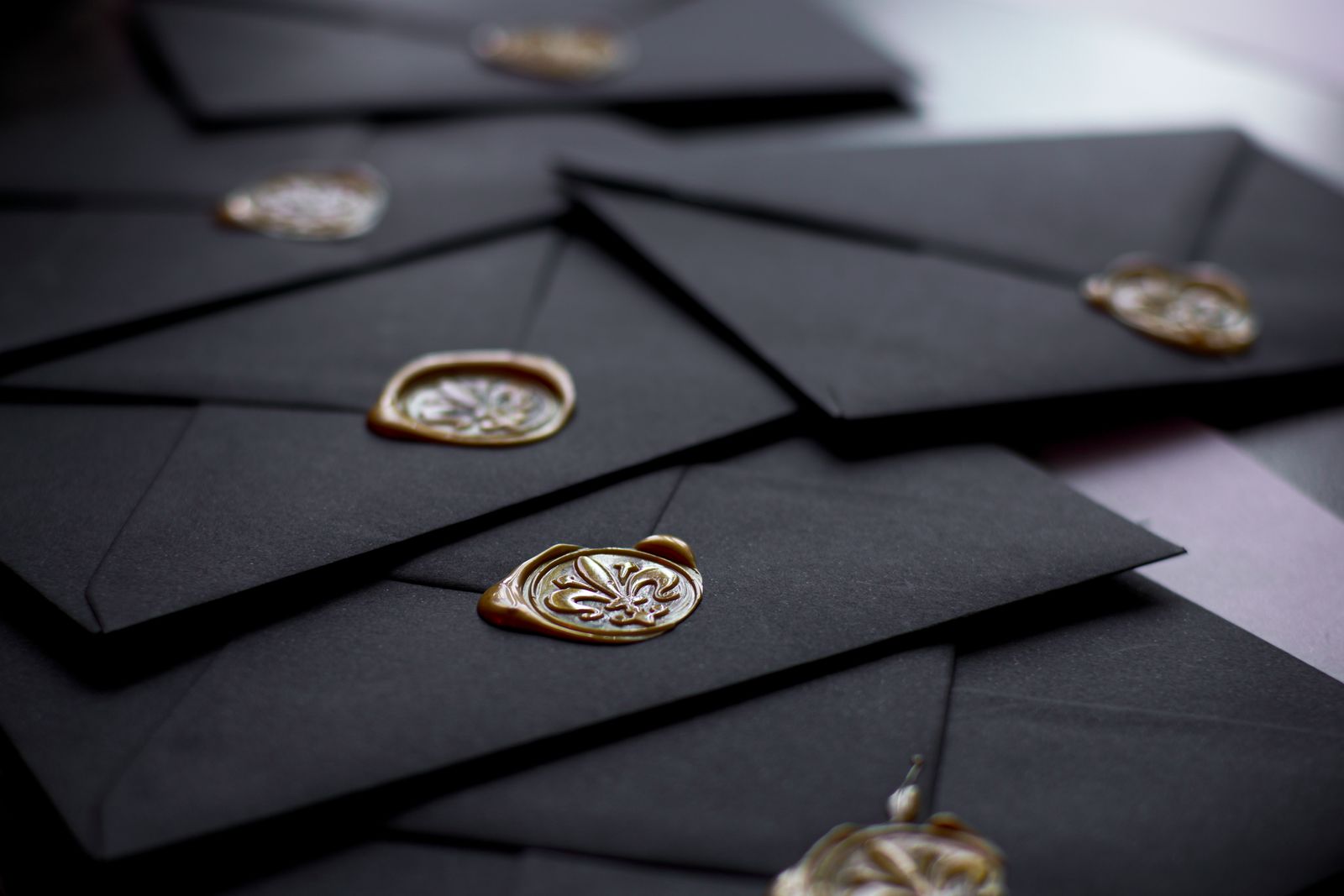
A large mailing can be thoughtful and practical at the same time. Wax seals add a tactile detail, but they also affect how an envelope is prepared and handled. Before you choose a design or set a mail date, map out the pieces, decisions, and postal requirements for the whole project.
Start with the mailing plan
Write down the audience, approximate quantity, contents, destination mix, and the date by which recipients should receive the mail. Separate confirmed details from estimates. A final recipient count, approved artwork, and completed proof help a printer or mailing provider give you a realistic production schedule.
- Choose the format. Decide whether you are sending a note, invitation, card, or a multi-piece package. Consider the finished size, paper, envelope, inserts, and whether each recipient gets the same contents.
- Prepare recipient data carefully. Collect only the fields needed for addressing and personalization. Check names, addresses, country formats, duplicates, and authorization to use the list. Ask the provider how they accept files and protect recipient information before sending it.
- Approve a physical or digital proof. Review spelling, address placement, color, seal size, and how the envelope closes. A sample can reveal fit or handling issues that are hard to judge on screen.
- Confirm postal handling. A raised or rigid embellishment may affect machinability, postage, and preparation. Ask the postal service or mailing provider to evaluate the finished piece and confirm current postage before the full run.
Plan for the wax seal
Wax and envelope combinations vary. A seal's size, placement, thickness, wax formula, envelope stock, and postal route can all affect how it handles. Avoid assuming that a seal will pass through automated equipment or arrive unchanged. If appearance on arrival matters, ask about protective options and have the finished sample assessed before approving production.
For invitations, coordinate the envelope and seal with the complete suite. Our wedding invitation guide covers design considerations. For a personal project, see our mailing checklist and verify current postal requirements for your specific piece.
Build a realistic schedule and budget
Request a written estimate that identifies what is included: printing, envelopes, assembly, seal materials and application, addressing, postage, proofing, and any setup or delivery fees. Ask which items depend on quantity or customization. Prices and timelines vary by provider and project, so compare like-for-like estimates rather than relying on a general per-piece figure.
Work backward from the desired in-home date. Include time for list cleanup, artwork, proof approval, production, postal acceptance, and delivery. Build in room for corrections, and avoid treating a dispatch date as a delivery guarantee.
Questions to ask a mailing provider
- What quantities, formats, and personalization options can you support for this project?
- What recipient file formats do you accept, and how is the information transferred and retained?
- Can you provide a proof or sample using the actual envelope and seal materials?
- Who confirms postage and nonmachinable or other special handling requirements?
- What is included in the estimate, and what could change the final price or schedule?
For a current Matterleaf project, review the available service and pricing details and contact us through the site with the quantity, format, destination, and timing. We can confirm whether the requested format is supported and provide project-specific details before you prepare a mailing.
Have a message worth making tangible?
A printed letter, a few pieces in an envelope, or something more particular. Tell us what you want to send. We will help work through the format and handle the physical work, from one recipient onward.