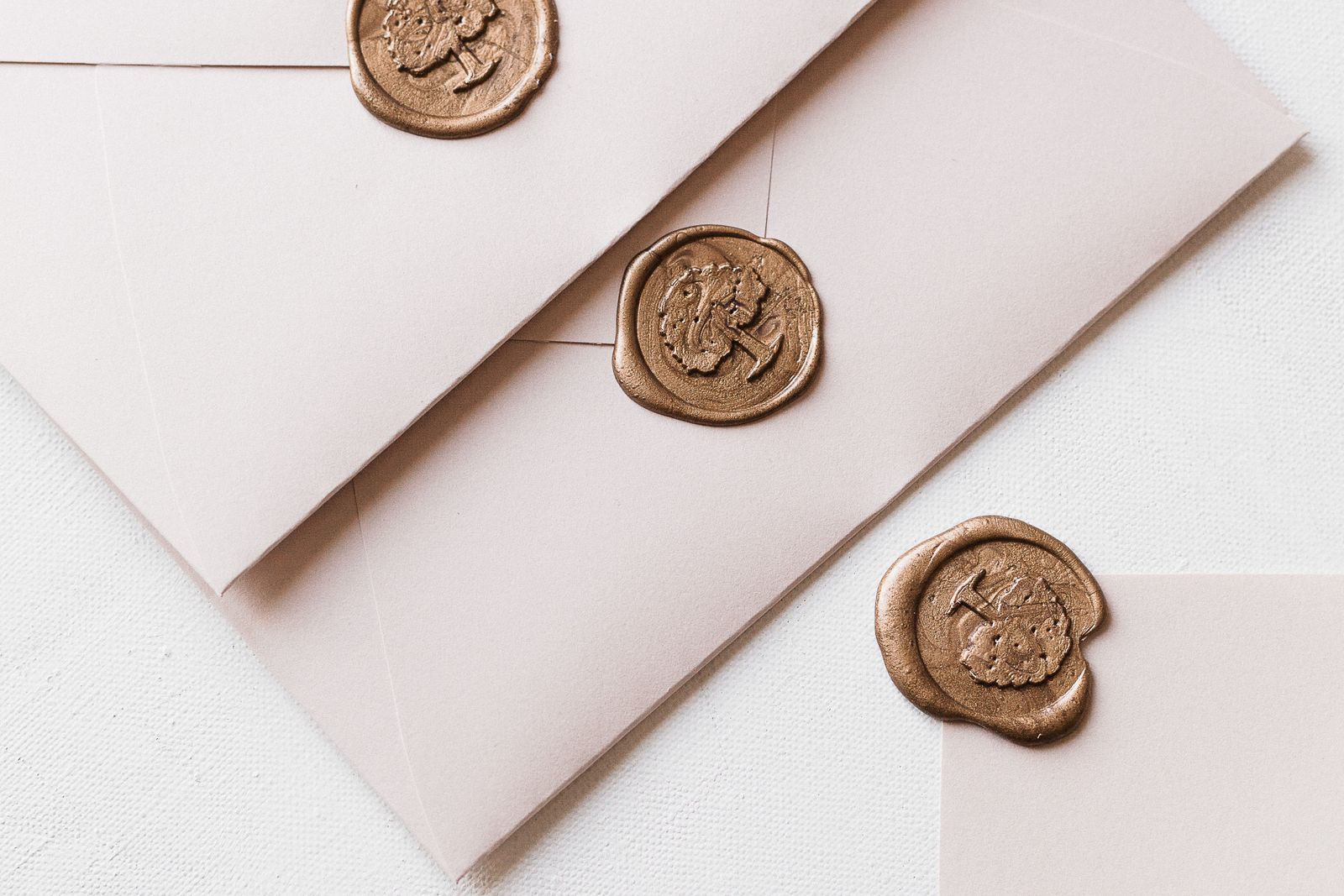
Before mailing a wax-sealed letter, check the envelope, closure, thickness, and required postage. The finished seal and the whole envelope affect how the piece travels. Postal eligibility and classification are covered separately in the USPS standards overview; transit times remain in the postal service’s hands.
1. Finish and close the envelope
Address the envelope using its intended layout, seal the flap with the envelope's own adhesive, then add any decorative wax as a separate finish. Do not rely on the wax seal as the only closure unless the envelope and wax maker specifically support that use. Let the seal cool and follow the product instructions before handling.
2. Inspect the assembled piece
Check that the contents are secure, the envelope closes, and the seal does not obscure the address, postage, return address, or required markings. Note the complete piece's dimensions, weight, thickness, shape, and rigidity. Address placement can affect how USPS measures a letter; see the current DMM face-of-mailpiece standards.
3. Decide whether an outer envelope helps
An outer envelope can put a layer between a decorative inner piece and direct contact. It also adds material and changes the completed mailpiece. Recheck the assembled dimensions, weight, thickness, and closure. For invitation suites, see when an outer envelope may make sense.
4. Confirm postal category and postage
Compare the finished piece with the current USPS Domestic Mail Manual and Notice 123 price list. Rules and prices may change. When a format is unusual or its category is unclear, ask USPS to assess a finished sample before preparing the full mailing. A request for special handling is not a guarantee of manual processing.
5. Scale only after a sample review
For a batch, prepare one complete sample using the intended stock, contents, seal, and envelope. Check its dimensions, closure, address area, and assembly. A sample helps you catch design and fit problems; it cannot predict every sorting or transit condition.
For a production partner, agree the format, supported materials, assembly, recipient data, postage, and timing in writing. Matterleaf plans custom paper mailings and recurring programs around each project; postal timing and handling depend on the finished piece and mail service used. See custom paper-mail packages and recurring mail fulfillment.
Have a message worth making tangible?
A printed letter, a few pieces in an envelope, or something more particular. Tell us what you want to send. We will help work through the format and handle the physical work, from one recipient onward.