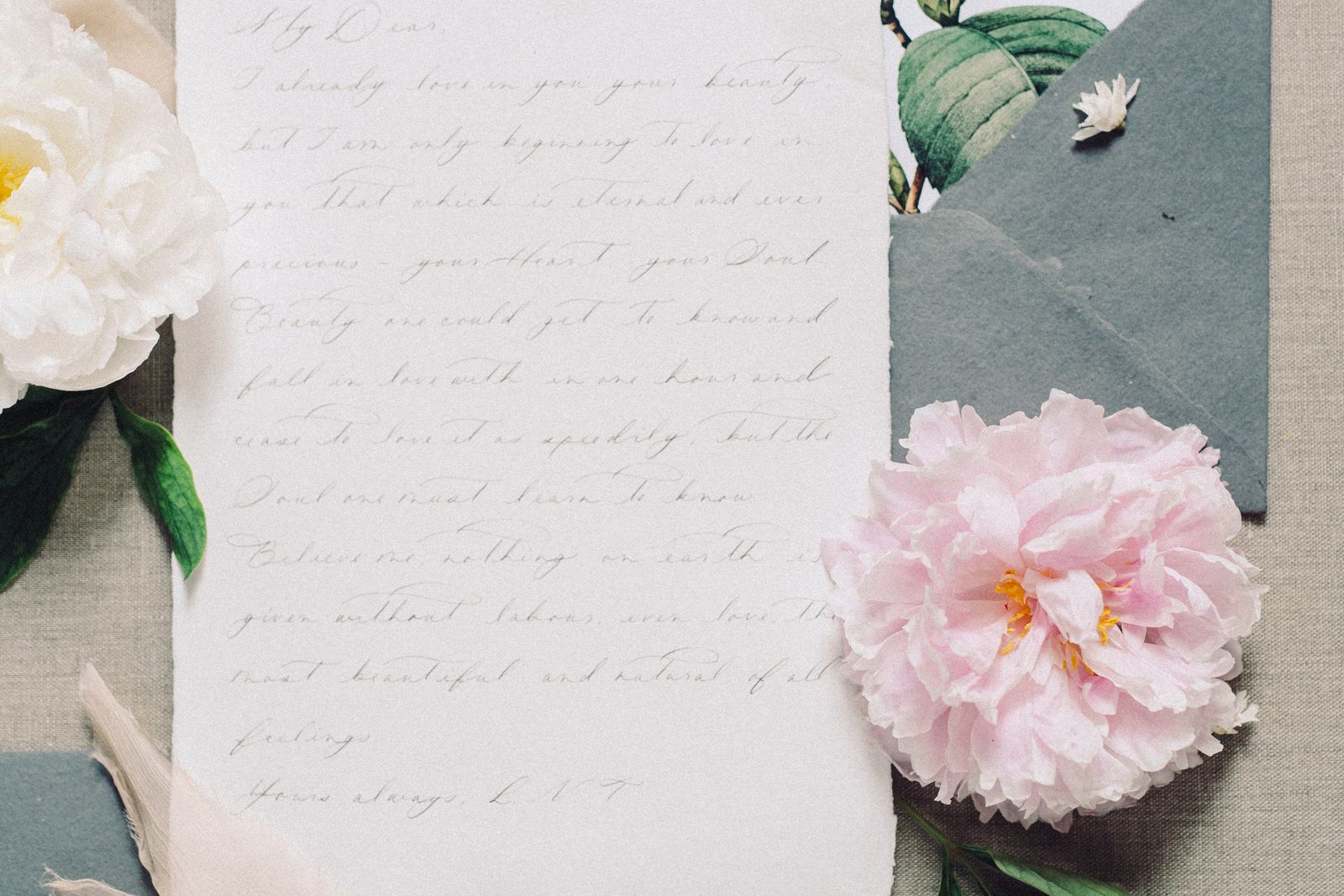
A seal design has a small working area, so the useful question is not only what motif looks appealing on screen. It is whether the shape can be recognized at the finished impression size, suit the sender, and be made within the stamp maker's current specifications. Use these ideas as starting points, then request an actual-size proof.
Personal marks
- Single initial: One serif, script, or block letter with enough open space to remain legible.
- Two initials: Side-by-side or interlocking letters; avoid overlaps that close the small interior gaps.
- Short monogram: A compact group of initials, tested at the final diameter rather than judged from a large screen preview.
- Family or organization emblem: A simplified, authorized central symbol with a clear silhouette.
Nature and place
- Single flower or leaf: Use a few defining shapes instead of fine veins and tiny petals.
- Branch or sprig: A short stem with spaced leaves gives a directional composition.
- Animal profile: A recognizable outer contour can survive reduction better than fur, feather, or scale detail.
- Mountain or coastline: One or two broad contours suggest a place without turning the mark into a miniature map.
Events and correspondence
- Date or short word: Keep the character count low and confirm that type remains readable at size.
- Paired symbols: Two simple shapes can reference a shared interest, place, or milestone.
- Branching wreath: A light frame can hold a central initial, provided the lines do not crowd it.
- Book or writing motif: A book, quill, or folded letter can suit a literary or correspondence theme.
Business and modern geometry
- Reduced logo mark: Use a single icon or monogram rather than a full-color logo with tiny wording.
- Concentric lines: A few spaced circles or arcs make a restrained geometric mark.
- Simple frame: A circle, shield, or square outline can contain one bold symbol.
Check artwork before ordering
- Identify the smallest intended impression and make a one-color version of the art.
- Ask the stamp maker for minimum line, gap, and file requirements; requirements vary by maker and process.
- Review a true-size proof and simplify any letters or shapes that merge.
- Confirm the impression fits the flap or surface without obscuring address or postage areas.
- If the seal will be mailed, assess the full finished piece under the applicable postal standards. A design proof is not a postal test.
For stamp diameter and construction questions, read how to choose a wax-seal stamp. For artwork preparation, see custom wax-seal design guidance; for logo-specific decisions, see adapting a logo for a seal. These ideas do not represent a catalog of Matterleaf designs. For a mailing, ask which artwork and finish can be supported in the approved format and review current service details.
Discuss a wax-sealed mailing with the proposed design, impression size, quantity, and envelope format.
Have a message worth making tangible?
A printed letter, a few pieces in an envelope, or something more particular. Tell us what you want to send. We will help work through the format and handle the physical work, from one recipient onward.