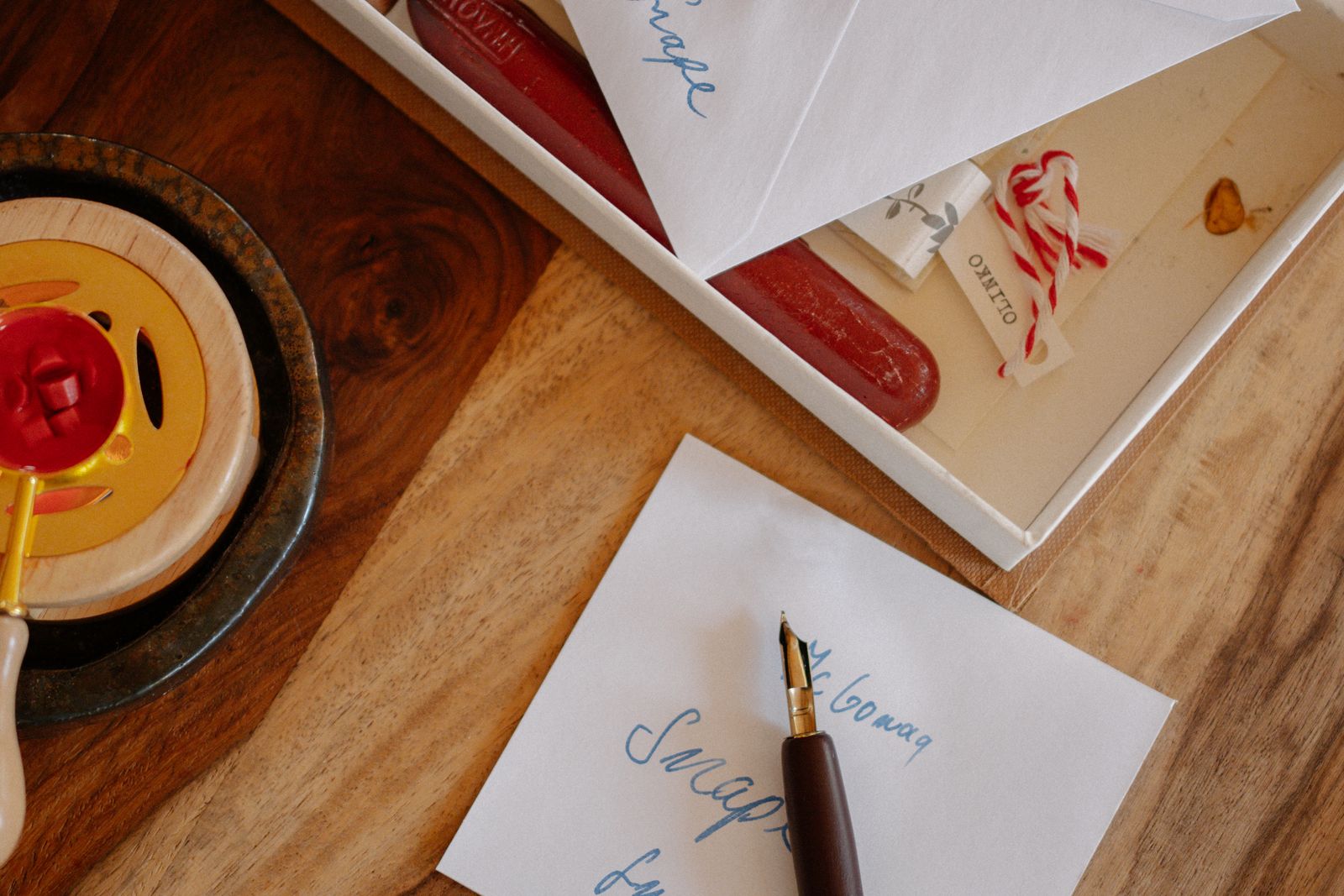
A vintage-inspired wax seal can draw on historical forms without pretending that one palette or motif belongs to every period. Museum objects show seals used in different settings, with varied shapes and roles. Start from a specific reference, then decide which visible feature—an emblem, an inscription, a border, or the impression itself—fits the piece you are designing.
Use documented objects as references
- A cylinder seal and its impression: The Metropolitan Museum of Art catalogs an ancient Near Eastern cylinder seal whose rolling design made an impression in clay. Its format and material differ from a modern letter closure, but it is a useful reference for how a repeated image can identify or mark a surface. See the museum's cylinder seal record.
- A sealed tablet case: Another Met object is an Old Assyrian clay case dated to the early second millennium BCE, with multiple seal impressions. The case protected a tablet; it is evidence of one administrative practice, not a template for all correspondence. See the tablet-case catalog entry.
- A medieval European seal: The Met's fourteenth-century example combines a device and inscription. For a contemporary design, that pairing suggests a clear central mark with a short surrounding legend rather than a crowded collection of symbols. See the object record.
- A writing set with a fob seal: The museum catalogs a South Staffordshire writing nécessaire that included a fob seal for sealing letters. This shows a seal within a writing kit, while the object's description remains specific to that set. See the writing-set record.
Translate the reference into a design
Choose one reference feature and keep the rest of the composition simple. A crest-like shield, a short initial, a botanical mark, or a small border can suggest a historical direction. These are design options, not universal historical symbols. If accuracy to a particular period matters, use a dated object record or specialist source for the motif rather than relying on a general “vintage” label.
Then check the artwork at the stamp's actual impression size. Confirm that letters, narrow gaps, and small shapes remain distinct in a single-color relief. Stamp makers' limits differ, so request their current minimum-detail guidance and a true-size proof. The separate stamp-selection guide covers scale and maker questions; the custom-design guide covers preparing artwork.
Coordinate color and paper
There is no historically correct color for every vintage-style piece. Compare the wax with the envelope, printed palette, and surrounding paper in actual samples if possible. A deep red, muted green, metallic shade, or neutral can each work when it supports the design; availability and appearance depend on the product and lighting. See the color guide for palette questions and the paper and finishing guide for broader stock tradeoffs.
Paper names alone do not guarantee a period look or a particular production result. Specify the actual stock, surface, print method, envelope, and finish. For a mailing, consider the assembled piece's dimensions, closure, stiffness, and thickness, and check the applicable postal standards. A sample can help review appearance and assembly; it does not establish postal eligibility or guarantee how the piece will travel.
Plan the modern production separately
A vintage visual direction does not require antique tools or materials. It can be carried by a simple emblem, paper color, typography, and a suitable closure. If planning a Matterleaf mailing, share the intended design, finished size, quantity, stock, and postal destination. The team can confirm which parts fit the approved format and quote; this article does not imply that every historical technique or material is available.
For a custom paper assembly, see custom printed mail packages. If the project is personal correspondence, review current standard formats and pricing before planning around a specific finish.
Have a message worth making tangible?
A printed letter, a few pieces in an envelope, or something more particular. Tell us what you want to send. We will help work through the format and handle the physical work, from one recipient onward.